Full & Part Time Study
KA Fine Art Atelier offers full-time and part-time courses throughout the year. The seats are limited since we provide one-on-one training.
Full-Time Program:
The full-time program is divided into four levels, with students progressing at their own pace. We provide a supportive environment and space, allowing them to develop their skills.
Part-Time Program:
The part-time program follows the same curriculum as the full-time program but with fewer weekly hours providing flexibility. Although it may take longer to complete, it upholds the same high standards.
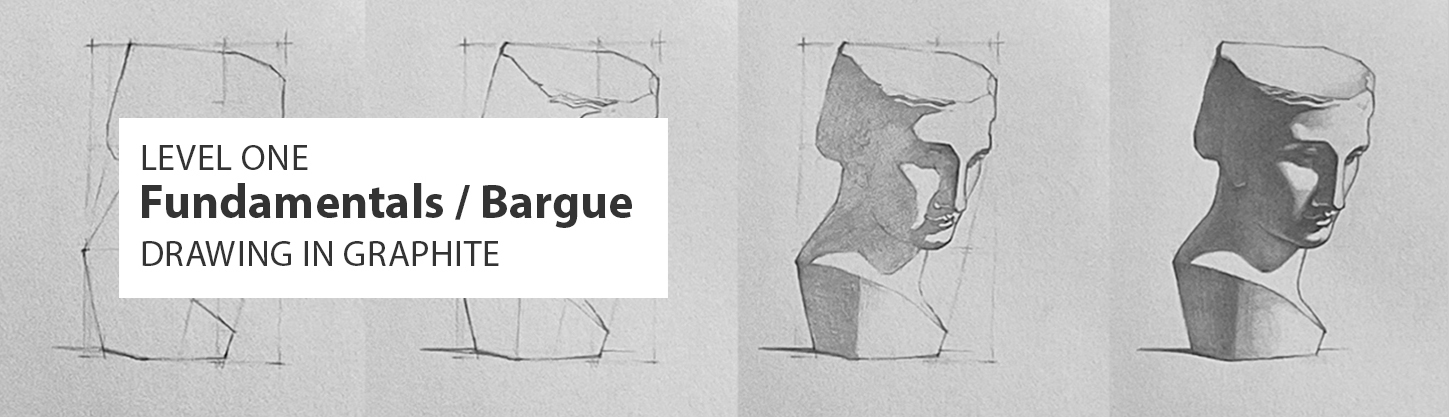
Fundamentals of Drawing
Exercises focus on outline, shapes, forms, perspectives, constructive proportion, shading, and value scales. These are taught step by step to help students build a visual connection with two-dimensional forms. By the end of this stage, students transition to practicing three-dimensional still-life drawing.
Bargue Study:
This method is widely used in Atelier fine art courses to refine observation skills, enhance precision, and master essential techniques such as value, form, light, and shadow-especially in advanced classical art. Bargue drawing is a comparative study that focuses on accuracy and measurement. Typically using graphite and carbon pencils.
Live model drawing sessions are conducted alongside the Bargue studies.
The three levels of Bargue drawing are:
Bargue Level 1: Basic Bargue plate reference drawings in graphite.
Bargue Level 2: Intermediate studies, copying master drawings from Bargue plate references.
Bargue Level 3: Advanced studies, focusing on accuracy, character, pose, proportion, aesthetics, with the potential for creating an original Bargue-style drawing.
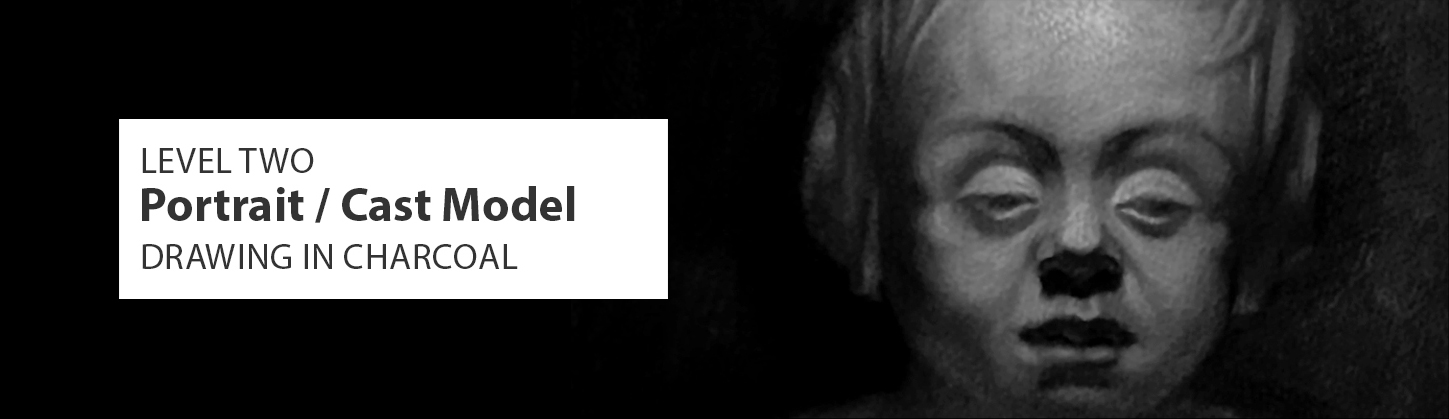
Portrait Drawing
Portrait drawing module builds upon the fundamentals. Capturing the likeness of a human face requires deep understanding of anatomy, geometric shapes, surfaces and how light interacts with them.
In this course, students learn to understand the anatomy, proportion, and structure of the human head. This study helps them create and present more realistic and expressive portraits from reference or life.
Cast Drawing:
Students learn to understand how light interacts with a three-dimensional form, focusing on light and dark values based on reflections of light. They work with plaster casts, initially focusing on various body parts before progressing to portraiture cast drawing.
The process involves using the sight-size method, light theory, and proportion to accurately translate a three-dimensional object into a two-dimensional drawing while creating the illusion of depth.
Live model drawing sessions are conducted alongside the cast drawing studies.
Cast Drawing Level 1: Basic charcoal cast drawing.
Cast Drawing Level 2: Intermediate - moderately difficult cast drawing.
Cast Drawing Level 3: Advanced - portraiture cast drawing.
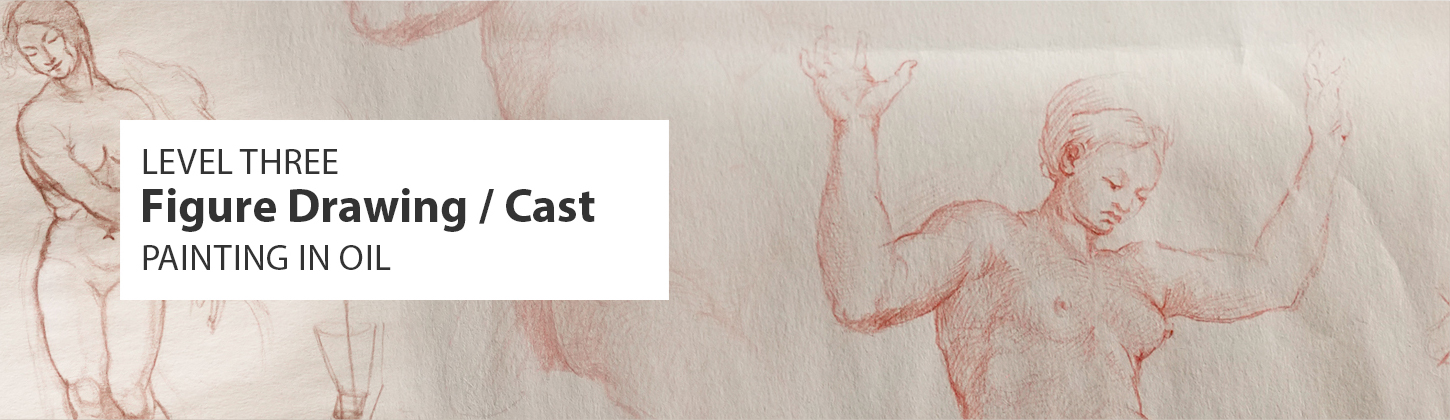
Figure Drawing
Mastering figure drawing requires practice and understanding of full figure anatomy. At this level students break complex forms into simple shapes and create lifelike drawings by studying the skeleton and muscles accurately while using different mediums and techniques.
Students focus on gesture drawing, forms, figurative techniques while studying from old masters and live models.
Cast painting in Oil:
Building upon their cast drawing skills, student's progress to monochromatic painting before transitioning to full-colour painting. This stage focuses on understanding the physical properties and characteristics of different painting mediums, as well as mastering the sequential application of oil paint.
Students also develop proficiency in palette preparation, comparative measurement techniques, and the fundamentals of colour mixing and value structure, essential for achieving accuracy and depth in their paintings.
Live model drawing sessions are conducted alongside the cast drawing studies.
Cast Painting Level 1: Basic Monochromatic painting
Cast Painting Level 2: Intermediate monochromatic and limited palette painting
Cast Painting Level 3: Advance full-palette painting with a focus on refinement and aesthetics.
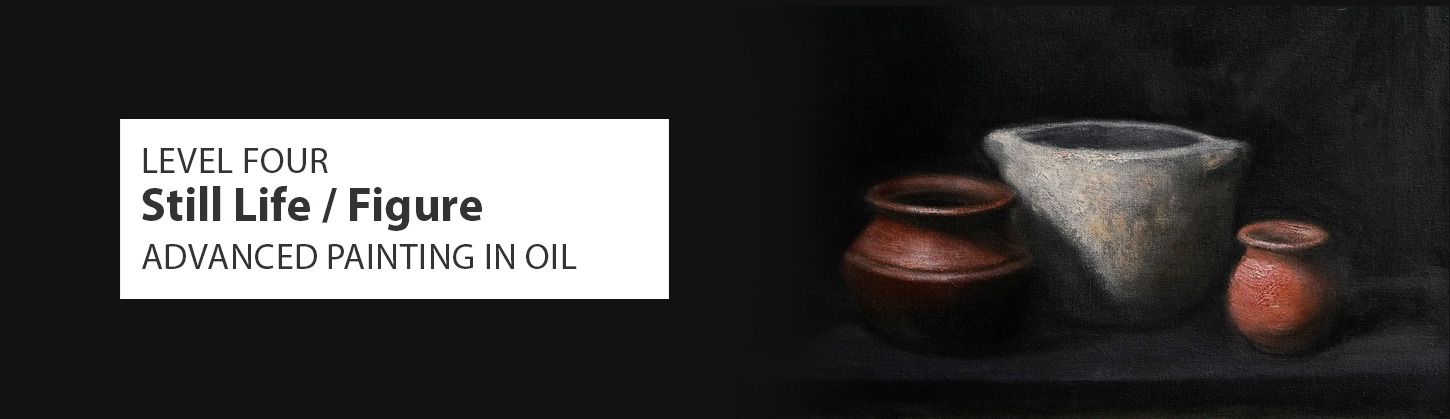
Advanced Oil Painting
As students' progress to Level Four, they develop the skills and competencies to explore and study composition by applying colour theory, lighting, perspective dynamics, geometric relationships, and more. Students will be introduced to both direct painting (Alla Prima) and indirect painting (layering method) to enhance their ability to apply textures, colours, forms, proportions, and depth in their work.
Still Life Painting:
Painting using limited palette and full palette
Portrait Painting:
Intermediate painting with a focus on light and dark areas
Full Figure Painting:
Advanced painting incorporating real objects of different mediums and textures.
Apprenticeship(optional)
After completing the four levels listed above, students can elect to start their apprenticeship at KAFA. They are further trained as per Classical tradition while working on Old Master copies, Narrative painting and teaching the next set of students at the atelier.